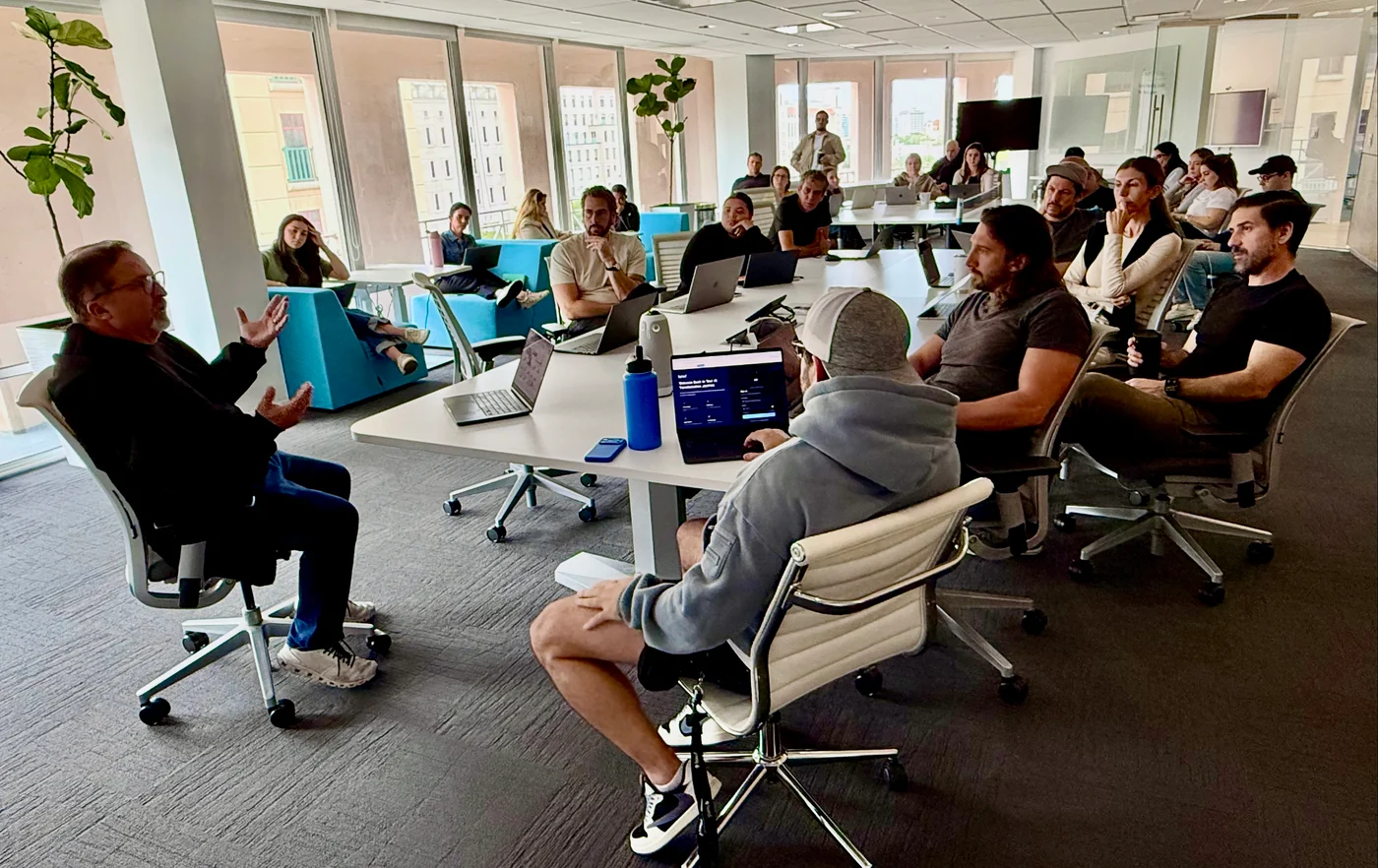
GlueIQ team discussing ideas around tables with open laptops.

GlueIQ × behmn · Case study

First the truth. Then a team that builds.

GlueIQ already had talented people building with AI. The Reality Gap™ revealed how to turn that individual ingenuity into shared capability—and a live product of their own.

Independent creative agency & advisory partner
Miami · February–May 2026

Read the full case study PDF · 9 pages

The work, inside GlueIQ.

30hrs
of role-based upskilling
4
functions with AI champions
6
teams in AI Game Day (hackathon)
Glue42
their own live AI platform

What the Reality Gap™ revealed

The talent was there. The connections weren’t.

Interviews two levels deep, with anonymized voices, uncovered both hidden capability and work ready to change. Those findings shaped the engagement.

GlueIQ team discussing ideas around tables with open laptops.

25%

Already building.

A quarter of the workforce was already creating AI tools: video pipelines, automated campaign resizing and internal micro-tool hubs. That capability was concentrated in individual builders, with no structured path to share it or turn mastery into advancement.
80hrs / week

One workflow. Four people.

The assessment identified 80 hours of recurring manual work each week across four people. It gave the team a concrete workflow to modernize and helped shape GlueOS, GlueIQ’s own intelligence layer.

The work · February to May

The diagnosis shaped the build.

  1. 01 · February–March

    Find the truth.

    The Reality Gap™ produced a capability map, a strategic briefing for the CEO and a ranked roadmap of AI workflows to modernize.

  2. 02 · From April

    Build the capability.

    Thirty hours of role-based upskilling, a custom capability dashboard for every person and one-to-one coaching for the strongest builders. A train-the-trainer model gave them a way to spread that capability.

  3. 03 · Live in May

    Ship the product.

    GlueIQ built GlueOS alongside behmn, then shipped Glue42 on that foundation. behmn’s co-founder and CTO, Matty Squarzoni, served as Glue42’s lead architect.

What changed in the work

Four functions. Capability you can point to.

The learning connected directly to each person’s role. The results showed up in the systems they built and the work their teams could do.

  • Leadership

    A CEO who builds.

    Already the agency’s most AI-fluent leader, Gaston Legorburu now architects and builds production systems himself in an IDE with Claude Code, following one-to-one coaching.

    “I am 1000× more productive.”

    Gaston Legorburu, Founder and CEO, GlueIQ
  • Finance

    Connected operations.

    The financial controller connected core financial systems and is building a second brain for finance and operations.

  • Creative

    Workflows the team uses.

    A creative director builds AI-driven creative workflows that the whole team now works from.

  • IT & infrastructure

    Capability in the toolset.

    The IT lead put models tailored to GlueIQ on every machine, embedding AI capability in the tools people use.

AI Game Day (hackathon)

Six teams. Every idea put to work.

behmn ran AI Game Day (hackathon) with GlueIQ. Six teams participated, and every idea they produced became a real product or an augmented workflow.

What GlueIQ now owns

A platform of their own. A team that can build on it.

GlueOS is GlueIQ’s proprietary intelligence layer, built alongside behmn. On that foundation, GlueIQ’s team built Glue42, a live agentic platform for marketing and commerce.

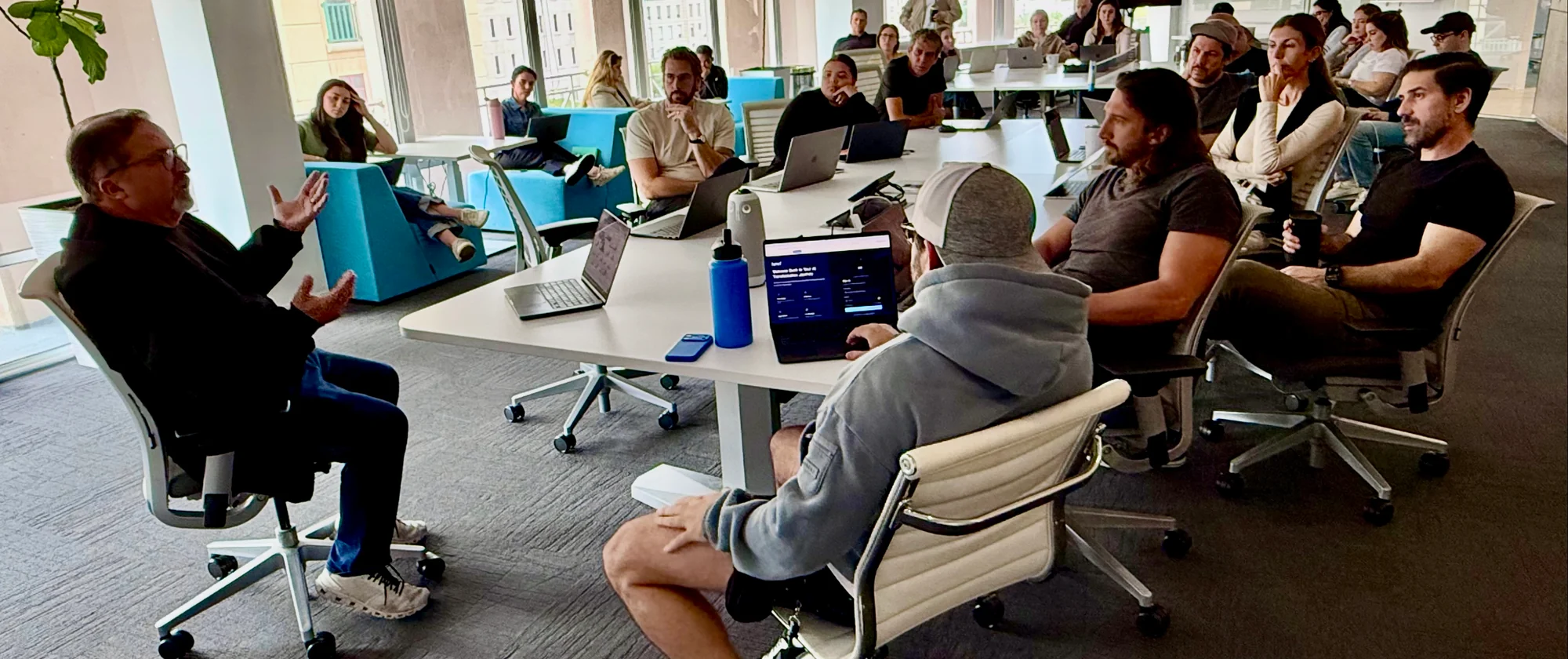
GlueIQ team discussing ideas around tables with open laptops.

The product belongs to GlueIQ. So does the capability to keep building.

Next: the Office of AI.

The engagement also delivered a 90-day plan for a cross-disciplinary Office of AI, with champions across leadership, creative, finance and IT.

Start with your reality

What could your team build?

Find the capability you already have—and the work it could change.